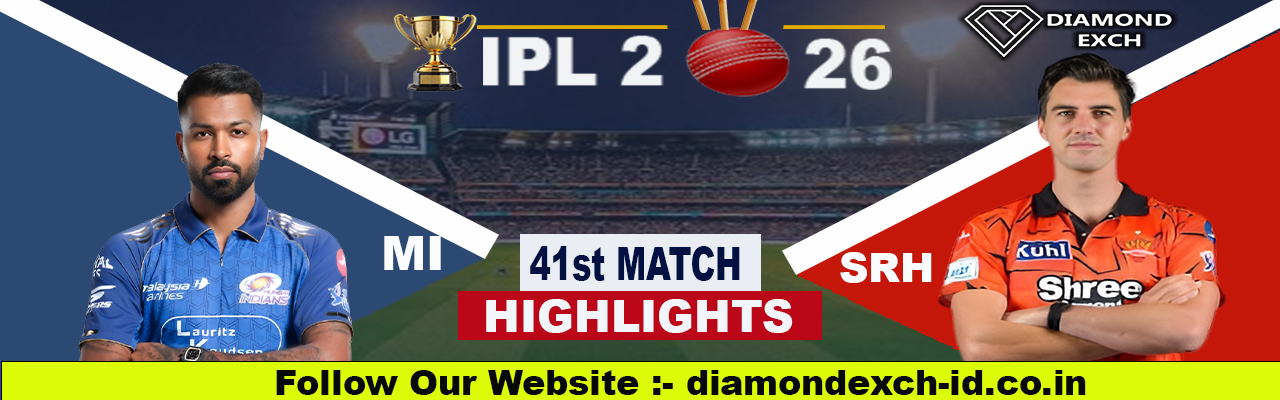
Mind Games on the Pitch: Key Tactical Battles That Will Decide the MI vs SRH Contest
📅 2026-04-29 • ✍️ Diamond Exchange
Despite its simplicity, IPL cricket is a game of deep strategy. Behind the boundaries, the bouncers and the centuries is a game of cat-and-mouse between captains, coach and analyst. The MI vs SRH match tonight holds multiple tactical threads that may go on to decide the fate of the game. In this article, we dissect the key battles that will have been planned out in the last 48 hours by the war rooms of the two sides and Diamond Exchange users have enjoyed all the matches of IPL.
Battle 1: Bumrah vs Travis Head
It's the big tactical showdown. One of the best death bowlers in world cricket - Jasprit Bumrah - versus arguably the most explosive, in-form batter in T20 - Travis Head. Bumrah's weaponry - his slower slower-ball bouncer, the in-swinging yorker and the back-of-a-length left-handed spin ball - will need to be used strategically to restrict Head to single figures, while avoiding the temptation to give him balls full and wide to drive. Head will, in turn, look to unsettle Bumrah by stepping across, trying to take advantage of the pace and go to the shorter boundary on Wankhede's unusual ground. If this happens early in the game (first-over or second-over), MI take out SRH's primary threat.
Battle 2: Rohit vs Cummins
Rohit has developed his technique against genuinely fast bowlers brilliantly. Rohit no longer needs to fall into the trap of taking Cummins head on, and can slog him out by rotating strike and fishing for the bad ball. But how Cummins will likely deal with Rohit is to get rid of him early in the innings, derailing MI's momentum. It will be a strategy of bowling full, hard (to the stumps to stop Rohit favouring the leg-side boundary drive) but maybe the odd short ball for good measure - to test the Indian captain's top hand and disrupt his rhythm. This early struggle will set the tone for MI's overall innings.
Battle 3: Powerplay Battle - Overs 1-6
Whoever controls the powerplay in T20 wins the match. Given the potential for both SRH openers and MI's top order to get off to a fast start, the fielding captain has some key choices to make in overs 1-6, which will include: when to bowl the strike bowler, whether to start with pace or use seam from the other end, and how tight or wide to field. MI's plan will probably involve Bumrah to start the game - taking the share off the SRH batsmen's top ends - with Trent Boult's left-armed swing to try and bait the right-handers.
Battle 4: Death Overs - Overs 17-20
Both teams have experts in this department. Bumrah remains unmatched in his ability to throw perfect yorkers at 145 kmph - his ACL in the death overs in the past few years is always less than 8.5. But SRH have Tim David's arch nemesis batters in Aiden Markram and Heinrich Klaasen, with the quick hands and fast feet needed to combat the best. Death batting - is it possible for MI to save the last two overs as a team, or able to get 30+ in the last three overs for SRH? - might be crucial.
Battle 5: Middle-overs Spin Magic - The 8-15 Overs
The middle overs (overs 8-15) will see the real action take place. Both sides have to cleverly navigate the spin - MI will use the pace to try to speed up its play here, while SRH bowlers will seek to stifle the play with tight lines. The team who can better dictate strike rotation, use field positions to advantage, and take wickets will be leading the way into the last five overs.
Conclusion
In this clash of tactics, MI have the advantage as they have the best player in any of these five departments - Jasprit Bumrah. If Bumrah can cast his spell in the powerplay, clean Head out early and return to hold the fort in the final overs then MI's strategy is almost too easy. The Mumbai response requires Head to be outstanding in the first half of the game, and Cummins to alternatively create problems with the new ball. So, be ready with your Diamond Exchange ID to enjoy the live match.
Winner: Sunrisers Hyderabad (SRH)